
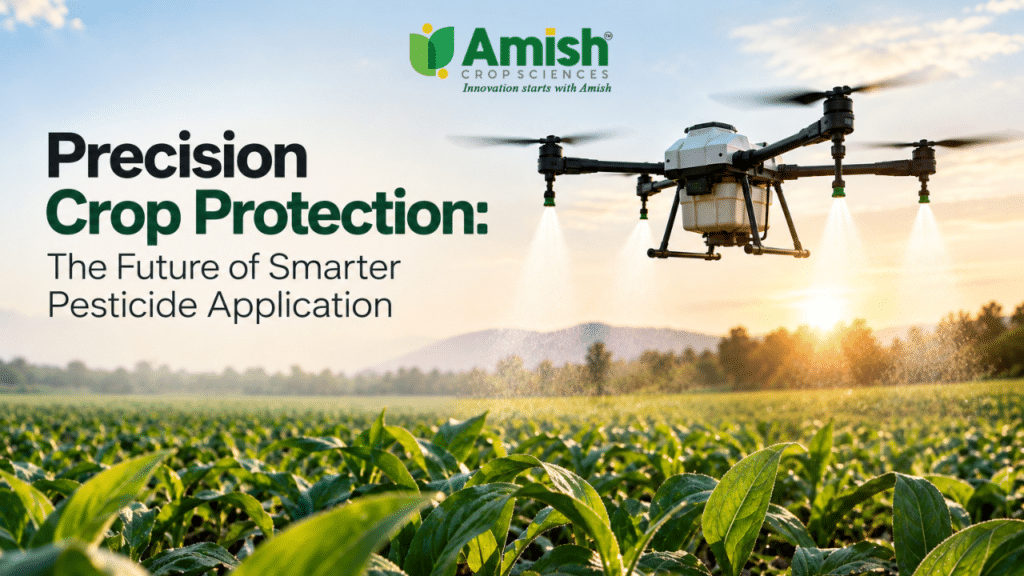
The field of agriculture is becoming increasingly precise year after year. The modern-day farmer is constantly innovating not only preventive measures against harmful weeds, diseases, and insects but also seeking methods to get the maximum effect from these preventive actions. This change results in the emergence of precision crop protection, which is a technology whose aim is to deliver the correct crop protection solution at the most suitable moment in the right place, depending on the crop needs.
In contrast to the traditional approach that might be based mainly on habits or generalisations, precision crop protection starts with recognising what is happening in the field. The presence of pests, signs of diseases, weed infestation, crop development stage, weather factors, etc., may all affect the timing and methods of crop protection.
In light of enhanced field monitoring, effective application techniques, and dependable crop protection products, the process of farming would become more effective.
What is Precision Crop Protection?
Precision crop protection refers to decision-making in crop protection that is tailored to specific field situations as opposed to applying the same strategy on all land.
The farmer could observe that there are some spots within the field where the pests are active and there are other spots that do not show any signs of pest attack. The occurrence of the disease also depends on the moisture content, plant density, and environment.
It’s quite simple, as the intention is to utilise the information available to understand where protection is required, what form of protection will suffice, and when.
The result is that precision farming plays a crucial role in modern crop protection through a combination of observation, technology, formulation, and correct application.
Why Smarter Pesticide Application Matters
Crop protection is one of the most important things required to maintain agricultural production. Pests in the form of insects can destroy the leaves, stems, roots, and other body parts of plants. Fungi also attack plants and infect them if the climatic conditions are favorable.
Nevertheless, successful protection does not just entail the application of more pesticides. Successful protection entails selecting appropriate crop protection solutions and using them properly.
Smarter application can help farmers:
- Identify pest, disease, or weed problems before taking action.
- Select products according to the crop and target problem.
- Apply products at an appropriate crop or pest stage.
- Follow recommended dosage and application instructions.
- Reduce unnecessary or repeated applications.
- Improve the overall efficiency of crop protection programmes.
It ensures that farmers see pesticides not just as inputs but as precision instruments for agriculture.
The Role of Technology in Modern Crop Protection
Technology is altering the way farmers view their farms. Field scouting is still beneficial; however, there are technologies that can assist in this activity, including drones, satellites, sensors, GPS equipment, and computerised farm management systems.
For example, the use of imaging technology helps in identifying sections that have stressed crops. GPS technology used to spray chemicals improves the application process. Weather data assists in selecting a more suitable spraying period for the farmer.
These technological tools do not supplant agricultural knowledge; rather, they furnish farmers and agronomists with more data to use in their decision-making.
As technology advances, precision crop protection will be an important tool that allows agriculture to develop from the generalised method of crop management into something location-specific.
Choosing the Right Crop Protection Products
Technology may point out an issue, but successful crop protection also involves using the right formulation.
The truth is, there is no universal product that can be used to control all kinds of pests or diseases. The best agricultural pesticides for crops are thus not just those with high toxicity. There are many factors that have to be considered when selecting the best pesticide for a particular application.
Different categories serve different purposes:
- Insecticides for crops are created for the control of harmful insects. Based on the active ingredient, insecticides can be classified in terms of their mode of action and method of application.
- Agricultural fungicides can be utilised for the control of any possible fungal infection that may occur in the crops. There are certain formulations which give protection, whereas some formulations have curative effects as well.
- Herbicides, on the other hand, have been formulated to deal with weeds. Getting a good supplier for an effective brand of herbicide manufacturer in India can ensure that formulations will be made with utmost care.
The important thing is making sure that the product matches the specific field requirement rather than taking a generic approach to all crop protection situations.
How Amish Crop Sciences Supports Modern Crop Protection
Amish Crop Sciences provides a collection of agricultural pesticides that have been created to serve different farming needs.
The range of products includes different pest-killing and fungus-killing agents with varying active ingredients and modes of action. This allows farmers and agricultural specialists to select means of dealing with various pest problems in the framework of a planned crop protection strategy.
For example, Amish Crop Sciences provides pesticides based on different insecticide formulations for managing different groups of insect pests, as well as fungicides of a systemic nature for coping with plant diseases.
With the use of effective crop protection products, along with the right assessment and application methods, a more effective strategy for maintaining healthy crops can be developed.
Precision Is Also About Responsible Use
Smarter crop protection involves much more than just selecting the right products; proper use is essential too.
Farmers must abide by the label instructions, dosage requirements, crop instructions, precautionary measures, and agricultural guidelines. The spray equipment must also be calibrated to deliver the right amount to the desired area.
Resistance management is also an aspect that should be considered. Depending on the same mode of action repeatedly may help develop resistance in some pests, diseases, or weeds. Crop rotation and the responsible rotation of crop protection products can be used in managing the problem.
Precision therefore means knowing not only what to apply, but also when, where, and how to apply it.
The Future of Crop Protection
In the coming years, farming will be determined by the integration of knowledge and practices of agriculture with improved information and tools. Precision technology will enable farmers to learn about field variability, and improved formulations will give them pest and disease management solutions.
Modern crop protection will go in that direction: from general measures to targeted ones based on actual needs.
For the farmer, the objective is still the same: to safeguard the crop and help it realise its full potential for productivity. The difference is in the increased precision of this objective.
With better surveillance, careful usage of pesticides, and reliable crop protection solutions, precision crop protection can play a crucial role in modern farming.
At Amish Crop Sciences, the goal is to provide sustainable solutions that aid agriculture and are made with modern farming in mind. Due to the advancement of agriculture, the right use of the proper product, with the right knowledge, can assist farmers in improving efficiency in protecting their crops.
FAQs
A. Precision crop protection refers to a strategy of pest, disease, and weed management in crops through monitoring the fields, using technologies, and precise application methods.
A. Modern techniques of crop protection offer reliable assistance to growers in detecting the problems crops have and in finding the appropriate materials, timing of application, and methods for more effective crop management.
A. When choosing crop protection products, one must consider different factors such as what kind of crop is being planted and what the targeted types of insects, illnesses, or weeds are.
A. Insecticides for crops help manage damaging insect pests, while agricultural fungicides are used to manage fungal diseases that may affect crop health and productivity.
A. Appropriate use will ensure that pesticides in agriculture are applied in appropriate doses, at the right time, and in the right manner. This will ensure effective crop protection without over-applying pesticides.
Follow us on Instagram.